Key Takeaways From XPONENTIAL Europe 2026: Where UAV Innovation Is Moving Next?
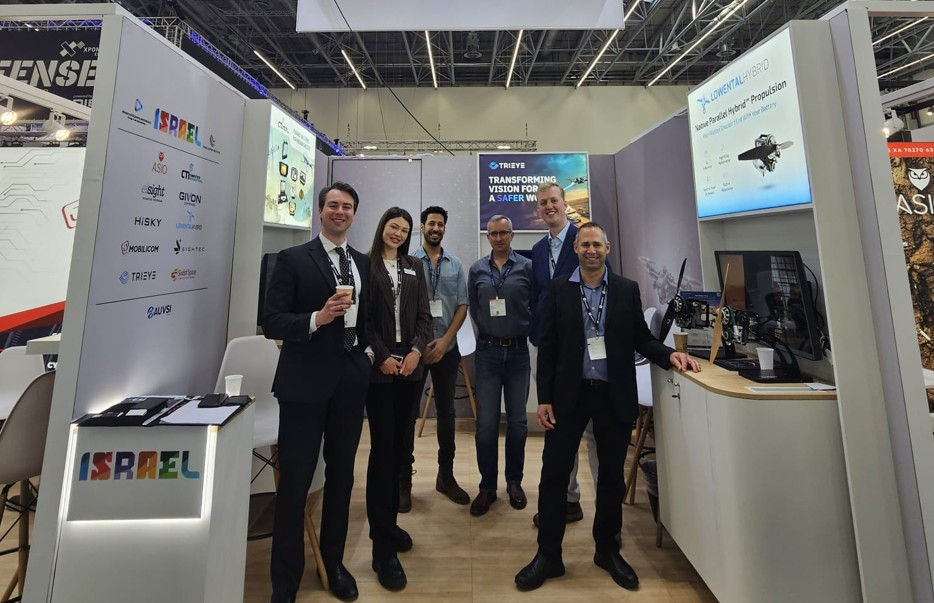
XPONENTIAL Europe 2026 made one thing very clear: the UAV market is moving into a new phase.
The conversation is no longer centered only on drones as standalone products, or on pilot projects designed to prove a concept. Across the exhibition floor and in industry discussions, the focus has shifted toward operational autonomy, deployable systems, and technologies that can create meaningful performance advantages in the field. That broader framing is visible in how the platforms presented at XPONENTIAL are positioning the market itself, with increasing emphasis on autonomy, AI integration, resilience, security, and real-world implementation. At the same time, industry forecasts continue to point to strong long-term UAV expansion, with Europe remaining an important arena for defense, inspection, logistics, and infrastructure applications.
For Lowental Hybrid, this environment was highly validating.
From our perspective on the ground in Düsseldorf, it felt that propulsion was seeing less visible innovation than other parts of the UAV ecosystem. Many systems still fit into a familiar binary: either electric, or combustion. There was a visible abundance of engine suppliers offering incremental variations of existing approaches, while platform manufacturers appeared to be looking for something else entirely - solutions that could create a real step change in performance, endurance, and operational flexibility.
That is where Lowental Hybrid stood out.
Our Native Parallel Hybrid propulsion approach drew strong attention precisely because it did not resemble the standard choices on display. The response from technical visitors and OEM`s representatives was especially notable. Again and again, the reaction was immediate and intuitive: simple, smart, and clearly needed. There was particular appreciation for the low weight of our systems, alongside the operational logic of combining two power sources in a way that serves real mission needs.
This matters because the wider UAV market is becoming more demanding, not less. As autonomous systems mature, expectations are rising around endurance, resilience, onboard processing, mission adaptability, and the ability to perform reliably in more complex environments. Official XPONENTIAL framing around AI, security, operations, and implementation reflects exactly that broader shift. The show is no longer just about new autonomous flying hardware. It is increasingly about complete systems that can move from demonstration to deployment.
Another strong signal from the event was where commercial and operational gravity is concentrating.
A great deal of interest was centered on platforms below 50 kg, with especially strong attention around the 25 kg class. This appears to be a particularly active part of the market, where platform builders are balancing mission utility, regulatory practicality, payload needs, and scalability. For Lowental Hybrid, that makes the relevance of LH-01 especially clear. The under-25 kg segment is not just a technical niche. It is increasingly becoming a real operational focal point.
As the market becomes more crowded, more manufacturers are searching for ways to stand apart through operational performance. That can mean longer time on station, lower acoustic signature in key mission phases, greater redundancy, better mission flexibility, or improved power availability for evolving payload and autonomy demands. In that context, propulsion is no longer a background engineering decision. It is becoming one of the defining levers of platform competitiveness. That shift is especially relevant in defense and dual-use markets, where interest in resilient uncrewed capability continues to grow.
For Lowental Hybrid, XPONENTIAL Europe 2026 was therefore more than a visibility opportunity. It was a strong market signal.
It confirmed that the industry is moving toward solutions that combine performance with operational relevance. It showed that OEMs and technical teams are actively looking beyond conventional electric-versus-combustion tradeoffs. It also reinforced the importance of demonstrating not only technical promise, but real-world operational readiness. For Lowental Hybrid, that readiness is reflected in the fact that one of the company’s systems is expected to become operational within the Israel Defense Forces during 2026, providing an important indication of practical maturity in a demanding defense environment.
It also reinforced our view that hybrid propulsion - when designed natively and executed with weight and mission logic in mind - is becoming increasingly relevant for the next generation of tactical and dual-use UAV platforms.
As the UAV sector continues shifting from experimentation to fielded capability, the companies that matter most will be those solving real constraints, not just showcasing incremental improvements.
At XPONENTIAL Europe 2026, that direction felt unmistakable.
If you want to learn more about Lowental Hybrid’s Native Parallel Hybrid propulsion systems for UAV platforms, contact our expert team.


Comments